
Why This Can't Wait Until Next Hurricane Season
A home inspector gives the garage door about ninety seconds: open it, close it, check the obvious dents, move on. That's fine for a door that's going to sit in a dry garage in Ohio. It's not fine here. A door with a hairline crack in its reinforcement, a spring that's one cycle from snapping, or hardware rated for the wrong wind pressure can turn into a five-figure problem the first time a named storm rolls through the Gulf. Buy the house now, skip the real inspection, and you're often looking at a surprise repair or full replacement bill sometime before next summer's storm season instead of a negotiated credit at closing. Walk through this list yourself before you sign anything, or before your due-diligence period closes.
The Walkthrough: 11 Things to Check Yourself
- Spring condition and type. Look above the door for one or two long torsion springs on a bar, or check the sides for extension springs. Rust, visible gaps in the coils, or a spring that looks stretched out means it's near end-of-life. A failed spring means the door won't open at all, or worse, drops suddenly while someone's underneath it.
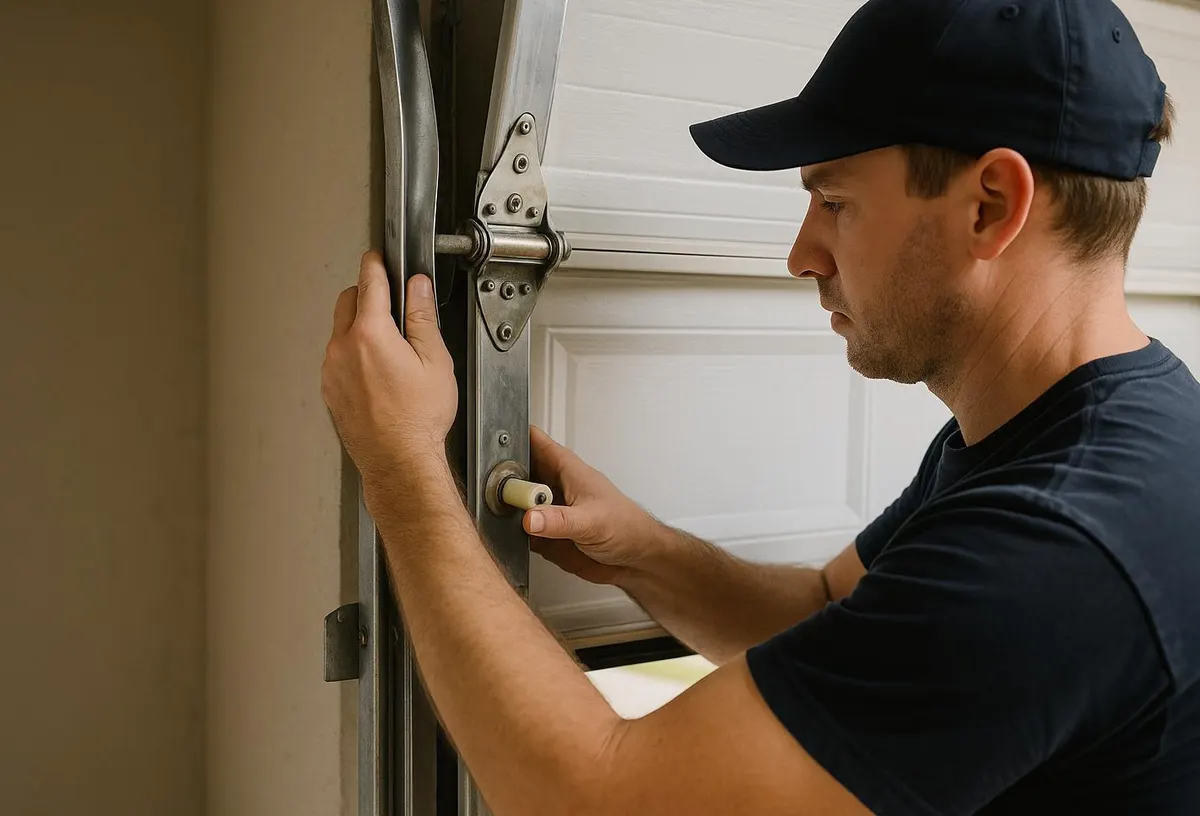
- Cables and rollers. Frayed strands on the lift cables or cracked, flat-spotted rollers point to a door that's been neglected. If it fails, the door can jerk off its track or come down unevenly on one side.
- Track alignment. Stand back and sight down both tracks. They should run perfectly parallel and vertical, then curve evenly into the horizontal section. A track bowed outward or pulling away from the wall usually means someone forced the door through an obstruction at some point, and it will keep happening until the track is reset or replaced.
- Panel condition, especially the bottom two feet. Salt air along the coast accelerates rust on steel doors, and that rust almost always starts low, where moisture sits. Bubbling paint, flaking metal, or soft spots on a wood-composite door mean water has already gotten into the panel core. This is the single most common issue inspectors miss, because it's cosmetic until it isn't.
- Bottom seal and weatherstripping. Pull on the rubber astragal along the bottom edge. If it's hard, cracked, or pulling away from the door, wind-driven rain during an afternoon downpour will find its way under it. A failed seal means water intrusion, and eventually warping of the bottom panel.
- Wind-load rating and bracing. Check the label on the inside of the door (usually on the end stile) for a wind-load rating, or ask the seller for the installation certificate. Coastal construction here is generally expected to meet specific wind-pressure standards, and a door installed without that rating, or missing the horizontal reinforcement struts across the back of the panels, is a liability the first time real wind hits it.
- Opener age and safety reversal. Openers typically run a 10-15 year service life. Test the auto-reverse: place a block of wood in the door's path and close it. If the door doesn't stop and reverse immediately, the force settings are wrong or the sensors are failing, and that's a real safety hazard, not a convenience issue.
- Photo-eye sensors. Look for the two small sensors a few inches off the floor on either side of the track. They should be clean, properly aligned, and not resting in standing water or on a corroded bracket. Misaligned sensors are a leading cause of doors that won't close at all.
- Manual balance test. Disconnect the opener (pull the release cord) and lift the door by hand halfway. It should stay roughly in place. If it crashes down or shoots up, the springs are out of balance, which puts extra strain on the opener motor and shortens its life.
- Moisture stains or standing water on the slab. Afternoon downpours and high water tables in this area mean a garage floor that slopes the wrong way, or sits low relative to the driveway, will show water lines or efflorescence along the base of the door frame. That's a sign of a chronic intrusion problem, not a one-time event.
- Hardware fasteners. Hinges, end bearing plates, and track brackets should be tight and free of heavy rust. Salt air corrodes exposed steel hardware faster than people expect, even when the panels themselves still look fine.
When to Call In a Professional Before You Close
If you find rust creeping into the panel seams, a door with no visible wind-load rating, or springs and cables that look original to a decades-old house, it's worth getting a second opinion before closing rather than after. Panama City Beach Garage Door can do a full pre-purchase assessment covering spring tension, track alignment, and wind-load compliance, and if something's failing, we'll quote Garage Door Spring Repair or a straightforward Garage Door Installation & Replacement so you know the real number before it's your problem instead of the seller's.
If you're closing on a home anywhere from Panama City Beach to Lynn Haven, Callaway, or Inlet Beach, give us a call for a pre-purchase garage door check, we'll tell you exactly what you're buying.